NO!! STOP IT!! THE COURT OF APPEALS DID *NOT* GIVE ITS BLESSING TO TRUMP’S MAIL-IN BALLOT ORDER YESTERDAY! IN FACT THIS DECISION IS A *GOOD* THING. LET ME ‘SPLAIN IT TO YOU
by Anne P. Mitchell, Esq. – attorney, law professor emeritus, and author of Federal law
Yesterday the Court of Appeals issued a decision – a *procedural* decision – in the case against Trump’s executive order “Ensuring Citizenship Verification and Integrity in Federal Elections”, otherwise known as the “Trump hates mail-in balloting” order.
And social media and news outlets are once again misrepresenting it, spreading misinformation and disinformation, whether from a place of not knowing what the hell they are talking about, or from a place of “actually we know what it said but we care more about ‘shares’ and clicks than the actual truth”.
So here’s the actual truth and the facts:
The plaintiffs (the Democratic Senatorial Campaign Committee (DSCC) and several individuals), filed this lawsuit asking the Court to issue an injunction to stop the executive order from taking effect.
The lower court (the district court) *correctly* declined to issue the injunction *because of a procedural restriction on the Court*: the case was not yet ripe.
So what does that mean? Ripeness is a legal doctrine that says, among other things, that a court *cannot* rule on something that *might* happen in the future, *if* certain things occur.
Basically, in this case, the doctrine of ripeness says that allegations upon which a request for an injunction is predicated *can’t be speculative*.
Put another way, the rule about ripeness is the legal equivalent of “no future-tripping”.
So the lower court *correctly* declined to grant an injunction against the executive order because the issue wasn’t ripe yet.
So, why did the plaintiffs appeal then? Because that’s what you do. Appealing a trial-level court ruling is routine. In fact it could be seen as malpractice to *not* appeal a trial court ruling. And besides, there is always that off chance that the appeals court will see it differently.
That brings us to the decision issued by the Court of Appeals yesterday, in which they affirmed the District Court’s decision to *not* issue an injunction because, indeed, the issue is not yet ripe.
But the Court of Appeals said *so much more*, if you actually read the opinion (of course included for Notes from the Front members), and if you know how to interpret legal decisions.
Basically, the Court of Appeals points *several* times to the language of the executive order, highlighting that it says that the executive order is to be effectuated *where feasible* and, and this is important, where it *complies with existing law*. As you will read, given how often and in how many ways they say it, the Court of Appeals is hinting that they see that this executive order does *not* comply with existing law, but it *has to be ripe* for them to rule on that.
In other words, once the case is ripe, they are telegraphing *how they will treat it*. And they are also telegraphing that to the lower court, and to the parties.
But wait, there’s more. Because *then* they go from hinting to saying the quiet part out loud, and here I quote directly from the decision:
“The action the [Executive] Order contemplates would involve the President, whom the Constitution vests with no express authority over the conduct of elections, undertaking a substantial and unfunded overhaul of election procedures – including the implementation of a nationwide reform to Postal Service mail-handling processes – on the threshold of the November election. Put differently, the Order “may not prove feasible to implement in any manner whatsoever,” at least before the 2026 election”
Let me translate that for you:
Once this sucker is ripe we’re going to smack it, hard.
And there’s still more! They *end* with: “Given the Executive Order’s repeated commands for agency action to conform to the law, this court cannot assume that the agencies will impose such late-breaking disruption on the States’ conduct of the 2026 elections.”
They honestly could not be clearer about how they view the actual issues. Nor about how they will treat this executive order once the issue is ripe. (As public comments for the proposed USPS rule pursuant to this executive order close this week, I expect to see renewed ripeness arguments soon.)
But I’ll bet that in most of the social media posts you’re seeing, *especially* the anonymous ones that hide behind cute, liberal-sounding names so you have no idea who is actually writing them, let alone their qualification, you weren’t told any of this, right? I’ll leave you to figure out why. I can count on the fingers of one hand the people (real people with real expertise, and real names) that I would suggest you follow; they include Jay Kuo and Heather Cox Richardson. If they aren’t putting their name to a post, take it with an *enormous* block of salt.
Notes from the Front members: The actual Court of Appeals decision, so you can see this all (and more) for yourself, is in your inbox now.
My reporting is 100% reader-supported. Here are ways that you can support my reporting:
– Join Notes from the Front: It’s just $5 a month, and you will truly be supporting what I do here, plus you get the documents that I include with each post. You can do that here: https://annepmitchell.substack.com
– Support my coffee habit here: https://www.annepmitchell.com/buy-anne-a-coffee/
– Share this post
P.S. If you actually read all the way to the bottom please leave a sentence in a comment that includes the word “salt”. It will show me that my efforts aren’t in vain and that people actually *do* read these things, and it will drive those who just skim crazy wondering just why everyone is talking about salt! ;~)
(The above was provided by me, Anne P. Mitchell, Esq. – attorney and law professor emeritus.)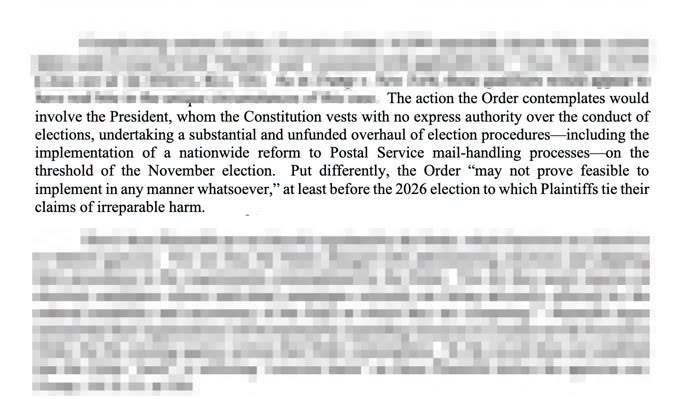
Source