
Waaaay back when – more than 25 years ago – Paul Vixie and I defined spam. Some of you may be thinking “Gee, Anne, who the heck are *you* to tell the world what the definition of spam should be?” Me? I’m nobody. But my dear friend Paul Vixie , well, he is exactly the person to tell the world what is and isn’t spam, in no small part because he is the creator of much of the email infrastructure on the Internet. And, of course, he created the first anti-spam blocklist.
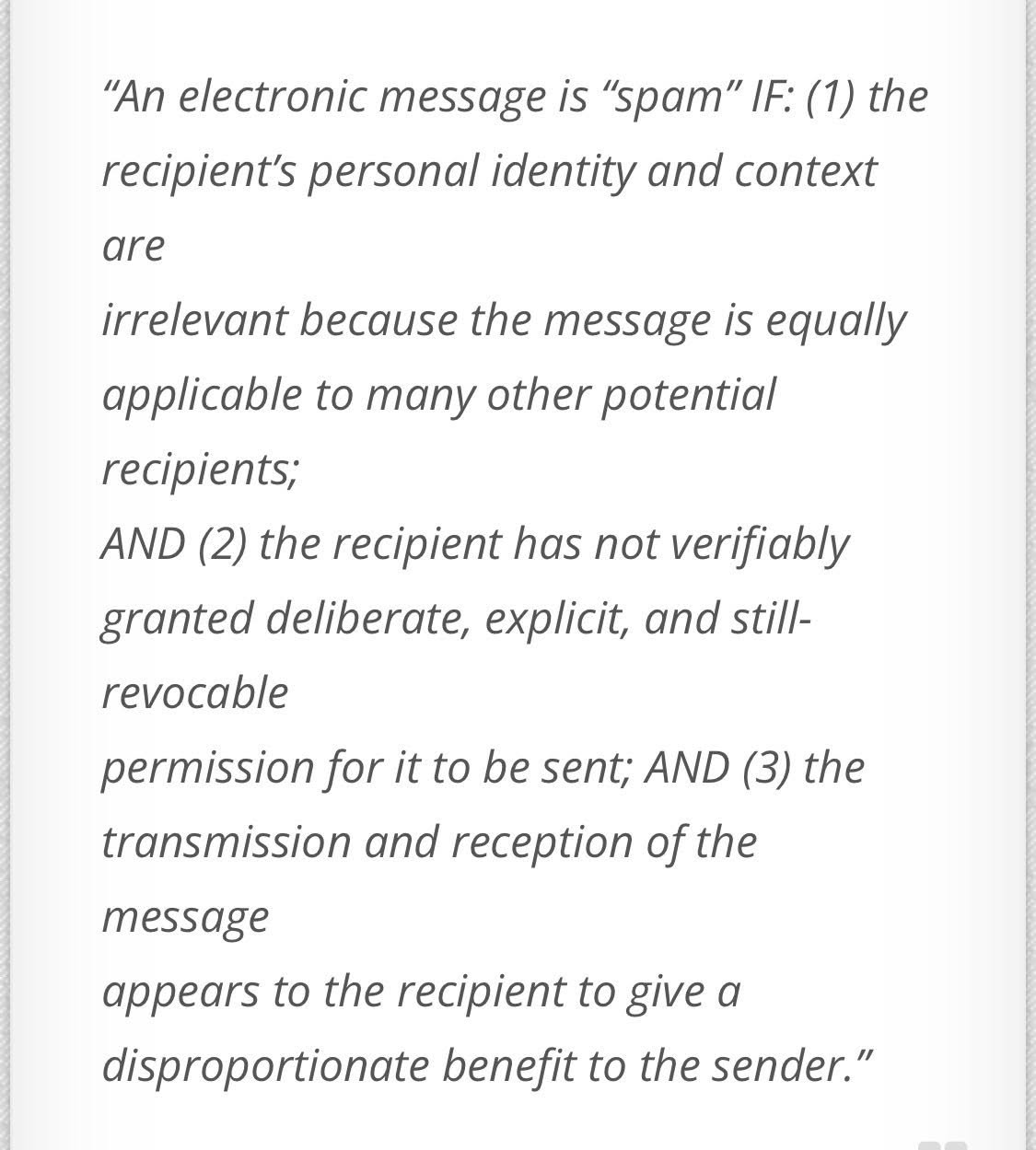
So, when I joined MAPS as their Director of Legal Affairs, one of our first orders of business was to sit down and hammer out a definition of spam – one which was air tight, wouldn’t create any situations where something not spam was erroenously classified as spam (known as ‘false positive’), and which also wouldn’t not classify something as spam that genuinely was spam (known as ‘false negatives’). The definition of spam that we came up with met our criteria, and I think it still stands up today as well as it did when we first drafted it. Here it is:
“An electronic message is “spam” IF: (1) the recipient’s personal identity and context ard irrelevant because the message is equally applicable to many other potential recipients;
AND (2) the recipient has not verifiably granted deliberate, explicit, and still-revocable permission for it to be sent;
AND (3) the transmission and reception of the message appears to the recipient to give a disproportionate benefit to the sender.”
Anyways, I was reminded of this when I saw Words with Friends’ definition of spam.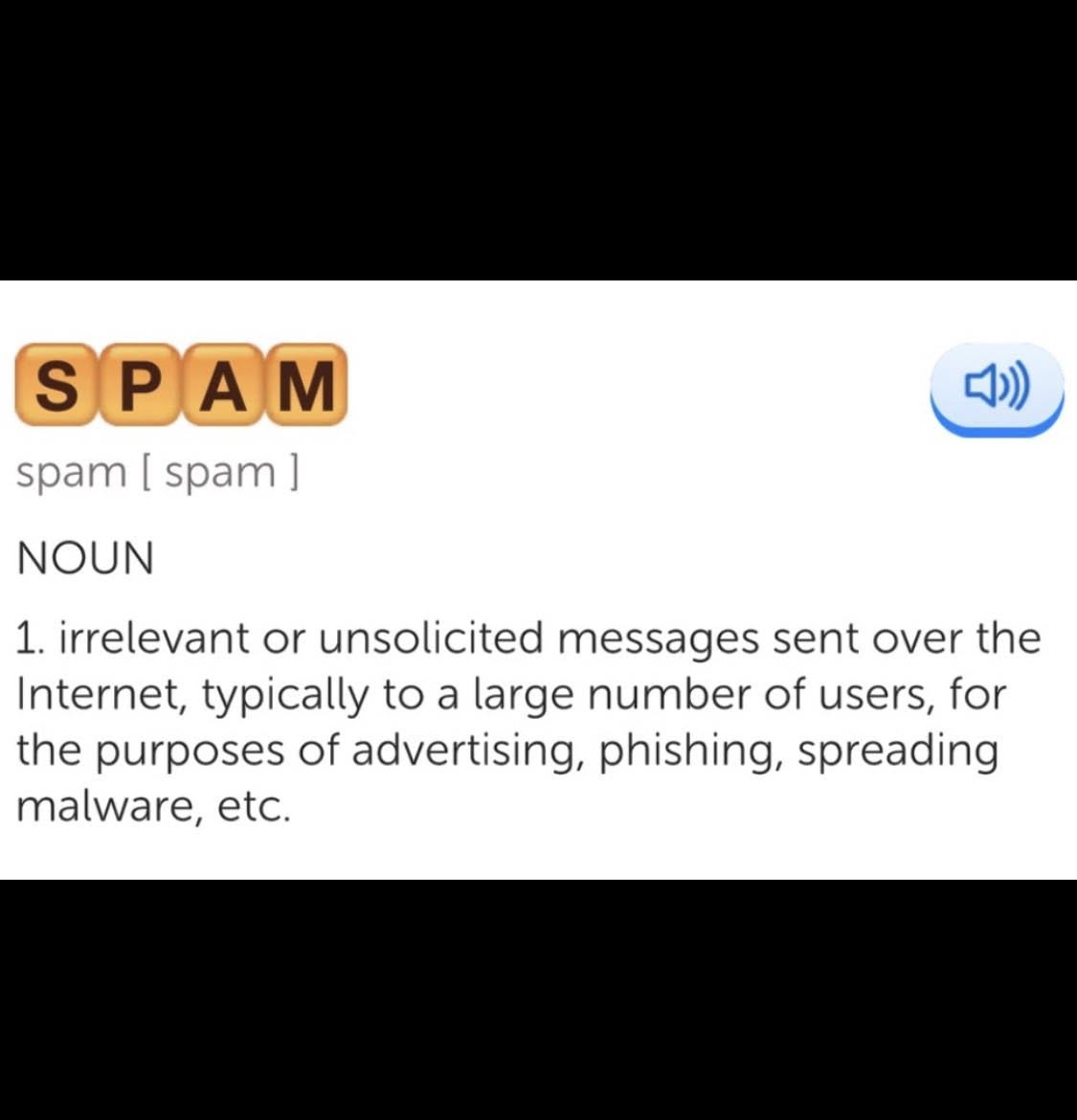
Source