A 92-year-old man sits in a doctor’s office getting lectured about his cholesterol levels. He survived the Depression, raised four children, buried a wife, and still beats his grandson at chess. Modern medicine is obsessing over numbers that might—might—add six months to a life already rich with nine decades.
This is the problem Louise Aronson dissects in Elderhood: we’ve built an entire medical system, and really an entire culture, that treats aging as a disease to be cured rather than a stage of life to be lived. As a geriatrician at UCSF, Aronson moves between clinical stories, research, and her own experience watching her father age to reveal how spectacularly we’ve failed our elders—and therefore our future selves. The book weaves together a medical memoir, a cultural critique, and an urgent call to reimagine what the last third of life could be.
From there, it gently but firmly ushers us into its deeper lessons, asking not just how we live, but how we choose to face what comes next.
1. An 80-Year-Old Isn’t a Broken 40-Year-Old
Our medical system has pediatrics for children, then treats everyone else like middle-aged bodies until they die. Aronson shows how absurd this is. Elderhood is a distinct life stage with its own physiology, needs, and possibilities. We don’t call childhood “proto-adulthood” or middle age “pre-death.” So why do we treat the last third of life as just decline from some imaginary peak? An elder body isn’t failing at being young—it’s succeeding at being old.
2. We Keep Torturing People Because We Can’t Say Goodbye
The most disturbing chapters show American medicine routinely harming elderly patients while trying to help them. A 94-year-old woman intubated, restrained, subjected to procedures that will—at best—return her to a nursing home. No one asked what she wanted. She’d already said she was tired, ready. But we couldn’t hear her over the machinery of our own denial. Aggressive treatments that make sense at 50 become torture at 85. We intervene because we can, not because we should. The real failure isn’t letting someone die—it’s forcing them to live on our terms instead of theirs.
3. Old People Report Being Happier Than They Were at 40
Here’s what breaks your brain: despite failing bodies and real losses, study after study shows elderly people report higher life satisfaction than middle-aged ones. Aronson’s patients confirm it. They’ve survived enough to have perspective. They know what matters. There’s a freedom in having less to prove. But we can’t see this because we’ve decided aging is only about what you lose, not what you gain. We’ve created a self-fulfilling prophecy: assume old age is worthless, don’t invest in making it better, then point at the result as proof. Meanwhile, elders keep insisting they’re fine—and we keep not believing them.
4. This Isn’t About Them, It’s About You
If you’re reading this under 60, you’re going to be old. Not maybe. Not if unlucky. You will wake up with joints that creak and people who look past you like you’re already gone. Which means this book isn’t about elder care—it’s about the future we’re building for ourselves. Aronson shows what’s possible when societies decide old age is worth designing for: programs that keep elders engaged, architecture for 80-year-old bodies, doctors who ask “what matters to you?” instead of “what’s the matter with you?” It’s not fantasy. It’s just cultures that grew up enough to honor more than one act of life.
Elderhood asks one question we keep avoiding: Can we stop treating aging like a disease and start treating it like what happens when you’re lucky enough to keep living? Because right now, we’re all headed toward a world we’ve designed to discard us. And that 92-year-old man with the good cholesterol? He’s not the problem. We are.
BOOK: https://amzn.to/4paWhyg
Enjoy the audiobook with a membership trial using the same link.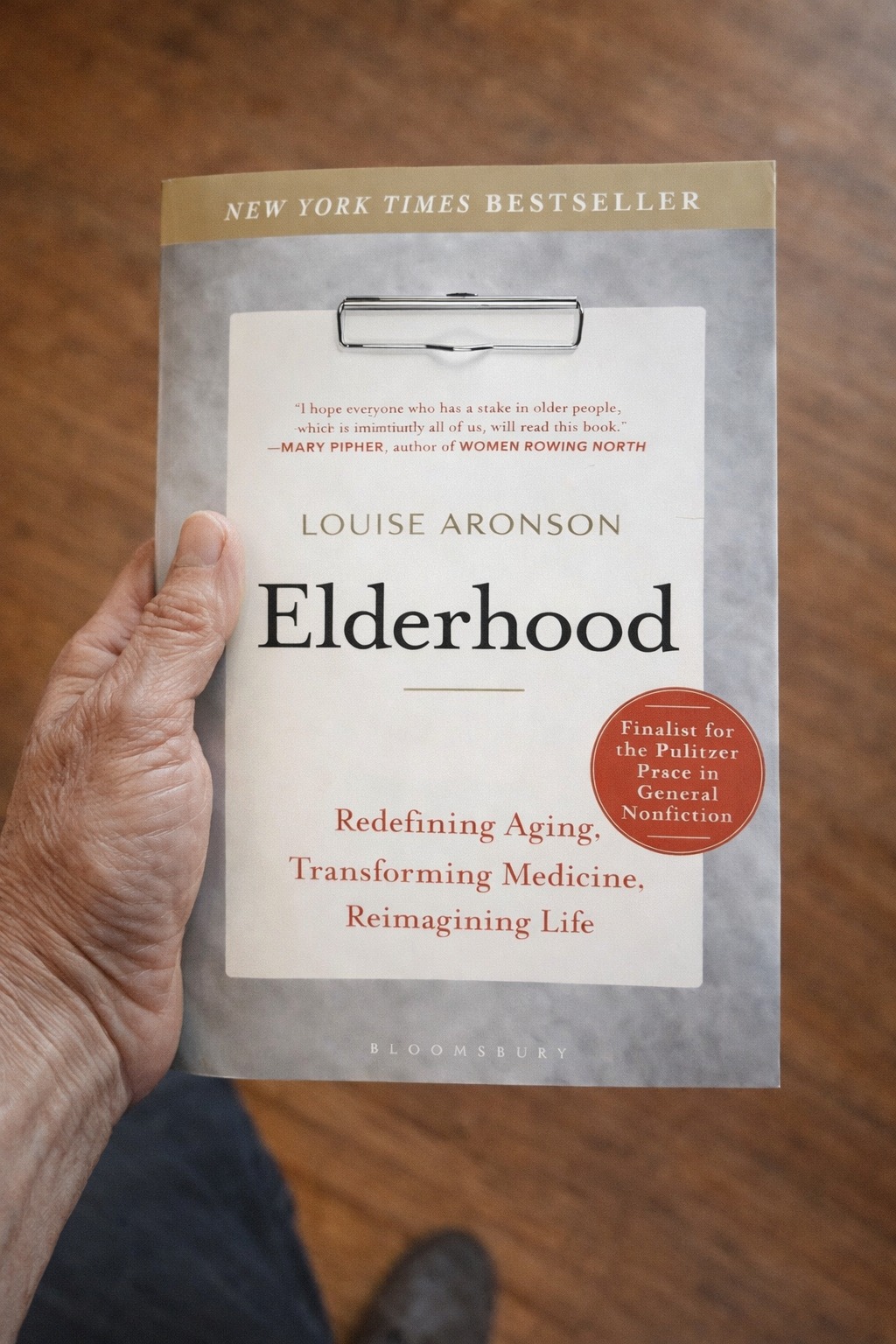
Source




10 comments
Jim Harrison
I wish this had been available when my father was living his last years (he died in ’21 at 91yoa).
His (well-meaning) doctor lectured him about his eating and exercise habits as if my Dad wanted to keep going another 10 years (he knew that was *highly* unlikely).
Sadly, I played along because “his doctor knew best.”
Merilyn Mau
I’m 86 and have had many conversations with my family as well as friends—— give us doctors who specialize in elder care, be sure to have a living will and health care directive! Most of all talk and share ideas and plan! There are so many in this stage of aging who are still avoiding the “talk”…….
Carmen Shaikh
Aging is not for the weak!
Lisa M Dahlquist
Much of the obsession with the current elder care system is due to capitalism. They want to keep you alive and suffering so they can bleed every dollar out of all the various systems.
Colleen Marie
When I worked as a nurse in family practice with a GP, we had an elderly patient-92, and she quit taking her BP medicine because she didn’t like the way it made her feel. When the doctor came out of the room, he was livid that she wouldn’t take her medication and he told her she was going to have a stroke and die. I looked him straight in the eyes and said, “Don’t you think that is her choice?” He just looked right back at me, and his whole body and demeanor relaxed, and he said, “yes, you are so right.” He smiled and went back in to assure her that she did not have to take that medicine anymore. This is a really difficult lesson for us health providers to come to terms with. I’m going to have to read this book.
Cathleen Cameron Kiss
Sitting in an ICU room w my 82 year old husband.
Same book came up in my feed as well. The title and subject hits home hard. I def want to read this at some point.
G Donald Peabody
It isn’t just the “medical system” that fails elders; it’s the whole dominant culture.
Cynthia Graves
My ENT friend and I had lunch over a year ago and he recommended this book. Talks about Medicine 3.0. Too many western practitioners “cook book” diagnostic procedures and then write Rx. That’s not preventive wellness care. I call it “cartel in clinic coats”
**for those who do not know—I am a dentist with 38 years of practice and I have literally saved over 10 lives in my career by pointing out medical issues that had gone unrecognized
https://peterattiamd.com/outlive/
Bev Ferguson
It will probably make more sense to those of us who have assisted elderly, often resistant, parents as they aged. It has certainly changed the conversations around our home. Our goal is to age well and leave less for our kids to deal with, and make good lifestyle changes now, strengthen bonds with family and friends, and talk about the what ifs and our values. Less attachment to a house and stuff. Might be a good read, or some of the same conclusions we have reached by experience.
Barbara Curtis
When I visited my mother for the last time, when we all knew it was her last few days, they were still poking her to test her blood sugar levels. She had long ago lost her eyesight and her voice, so she was just mouthing “ouch, ouch, ouch”. There was no reason to test her blood sugar levels in her last few days of life. I think this is the sort of thing this article is talking about.
Comments are closed.